A Six-Week Live Intensive
Art to Impact
Art to Impact- A Six-Week Live Intensive
Starts July 2, 2026 • Limited To 10 Seats
KRYSTAL CHRYSSOMALLIS • FOUNDING COHORT • JULY 2026
Luck is a
skill
You just haven't been taught it yet.
10 AM PST | LIMITED SPOTS REMAINING
Krystal Chryssomallis
FOUNDING COHORT
JULY 2026
Luck is a
skill
You just haven't been taught it yet.
10 AM PST | 5 SPOTS REMAINING
THE PATTERN
__________
Same room. Same opportunity.
Completely different results.
Every week someone gets the opportunity you wanted.
The job. The connection. The introduction.
The “yes.”
They were not more talented.
They were not more deserving.
You have seen it. Someone lands the role because they struck up a conversation with the right person at a conference.
A photographer gets access to a once-in-a-lifetime opportunity and creates the image that launches their career.
Two people meet on a random flight and build a partnership that changes their entire trajectory.
When this happens, you reach for a comfortable explanation.
"They knew the right people." "They had the right resources." "They started young." "They were in the right place at the right time."
Or the simplest one: they got lucky.
It is a comforting thought. It lets you off the hook.
But it’s not the whole story.
What about the dozens of other qualified people who wanted that same role? What about the other photographers given the same opportunity and missed the shot? How did those two people happen to sit next to each other on that exact plane?
What if luck was never the reason?
What if the real difference is a skill you can actually learn?
THE PATTERN
__________
Same room. Same opportunity.
Completely different results.
Every week someone gets the opportunity you wanted.
The job. The connection. The introduction. The “yes.”
They were not more talented. They were not more deserving.
You have seen it. Someone lands the role because they struck up a conversation with the right person at a conference.
A photographer gets access to a once-in-a-lifetime opportunity and creates the image that launches their career.
Two people meet on a random flight and build a partnership that changes their entire trajectory.
When this happens, you reach for a comfortable explanation.
"They knew the right people." "
They had the right resources." "
They started young."
"They were in the right place at the right time."
Or the simplest one: they got lucky.
It is a comforting thought. It lets you off the hook.
But it’s not the whole story.
What about the dozens of other qualified people who wanted that same role? What about the other photographers given the same opportunity and missed the shot? How did those two people happen to sit next to each other on that exact plane?
What if luck was never the reason?
What if the real difference is a skill you can actually learn?
THE LUCK BLINDSPOT
_______________
When you see luck as something that happens
to you, your behavior changes.
Most people see luck as an external force.
Unpredictable. Uncontrollable. Entirely outside themselves.
We knock on wood. We cross our fingers.
We watch someone else's win and whisper with quiet resignation: “they just got lucky.”
That single belief is why you are still watching other people get what you want.
When you see luck as something that happens to you, your behavior changes.
You stop looking for ways to generate momentum.
You stop noticing the subtle openings.
You narrow your vision on what to avoid, rather than what is available.
The opportunities pass by you. Not because they weren't there.
But because they fell directly into your blindspot.
THE LUCK BLINDSPOT
_______________
When you see luck as something that happens
to you, your behavior changes.
Most people see luck as an external force.
Unpredictable. Uncontrollable. Entirely outside themselves.
We knock on wood. We cross our fingers.
We watch someone else's win and whisper with quiet resignation: “they just got lucky.”
That single belief is why you are still watching other people get what you want.
When you see luck as something that happens to you, your behavior changes.
You stop looking for ways to generate momentum.
You stop noticing the subtle openings.
You narrow your vision on what to avoid, rather than what is available.
The opportunities pass by you. Not because they weren't there.
But because they fell directly into your blindspot.
THE REAL COST
_______________
You are not lacking talent. You are not lacking effort.
You are not lacking desire.
But look closely at your life right now:
There is a conversation you have been rehearsing for weeks and you still haven't had it.
There is an opportunity you talked yourself out of before you even tried.
There is work that is ready — you know it is ready — and it still hasn't moved.
There is a room you walked into already bracing for rejection, and got exactly what you expected.
You have watched people with less experience, less preparation, and less commitment walk away with the thing you were reaching for.
And you called it “luck.”
But somewhere underneath that, you have wondered if you are missing something everyone else seems to know.
You are missing something.
But it has nothing to do with talent, your confidence, or who you know.
It is how you are seeing.
Most people spend their lives trying to control what happens to them. But what happens is never fully in our hands.
How we see — that is.
And when that perception changes, everything that follows changes with it.
The people who appear lucky are not magic. They have simply trained themselves to see what others miss.
Luck is not passive. It is how you engage with what is actually available to you in any given moment. That is a skill. And it can be learned.
What you choose to see determines what becomes possible.
THE REAL COST
_______________
You are not lacking talent. You are not lacking effort.
You are not lacking desire.
But look closely at your life right now:
There is a conversation you have been rehearsing for weeks and you still haven't had it.
There is an opportunity you talked yourself out of before you even tried.
There is work that is ready — you know it is ready — and it still hasn't moved.
There is a room you walked into already bracing for rejection, and got exactly what you expected.
You have watched people with less experience, less preparation, and less commitment walk away with the thing you were reaching for.
And you called it “luck.”
But somewhere underneath that, you have wondered if you are missing something everyone else seems to know.
You are missing something.
But it has nothing to do with talent, your confidence, or who you know.
It is how you are seeing.
Most people spend their lives trying to control what happens to them. But what happens is never fully in our hands.
How we see — that is.
And when that perception changes, everything that follows changes with it.
The people who appear lucky are not magic. They have simply trained themselves to see what others miss.
Luck is not passive. It is how you engage with what is actually available to you in any given moment. That is a skill. And it can be learned.
What you choose to see determines what becomes possible.
THE RESEARCH
__________
The Science that Proves It
Dr. Richard Wiseman spent ten years studying people who consistently identified as “lucky” or “unlucky.”
In one experiment, he gave participants a newspaper and asked them to count the photographs inside.
Some finished in seconds.
Others took several minutes.
Why the difference?
Right on the second page, in large bold text was a message:
“Stop counting! There are 43 photographs in this newspaper.”
A few pages later:
“Tell the experimenter you saw this and win $250.”
The lucky people spotted both within seconds.
The unlucky people missed them entirely.
Same newspaper. Same opportunity. Placed right in front of everyone.
The difference was not intelligence. It was perception.
The unlucky participants had narrowed their focus so tightly on the task that everything outside it became invisible. The lucky ones were open, curious, scanning wider — and so they found what others walked past.
What changed for them wasn't circumstance. It was perception, and how they engaged with the room.
The Science proves the principle.
THE RESEARCH
__________
The Science that Proves It
Dr. Richard Wiseman spent ten years studying people who consistently identified as “lucky” or “unlucky.”
In one experiment, he gave participants a newspaper and asked them to count the photographs inside.
Some finished in seconds.
Others took several minutes.
Why the difference?
Right on the second page, in large bold text was a message:
“Stop counting! There are 43 photographs in th is newspaper.”
A few pages later:
“Tell the experimenter you saw this and win $250.”
The lucky people spotted both within seconds. The unlucky people missed them entirely.
Same newspaper. Same opportunity. Placed right in front of everyone.
The difference was not intelligence. It was perception.
The unlucky participants had narrowed their focus so tightly on the task that everything outside it became invisible. The lucky ones were open, curious, scanning wider — and so they found what others walked past.
What changed for them wasn't circumstance. It was perception, and how they engaged with the room.
The Science proves the principle.
IT CAME FROM THE FIELD
____________
Twenty years in the field showed me how to apply it.
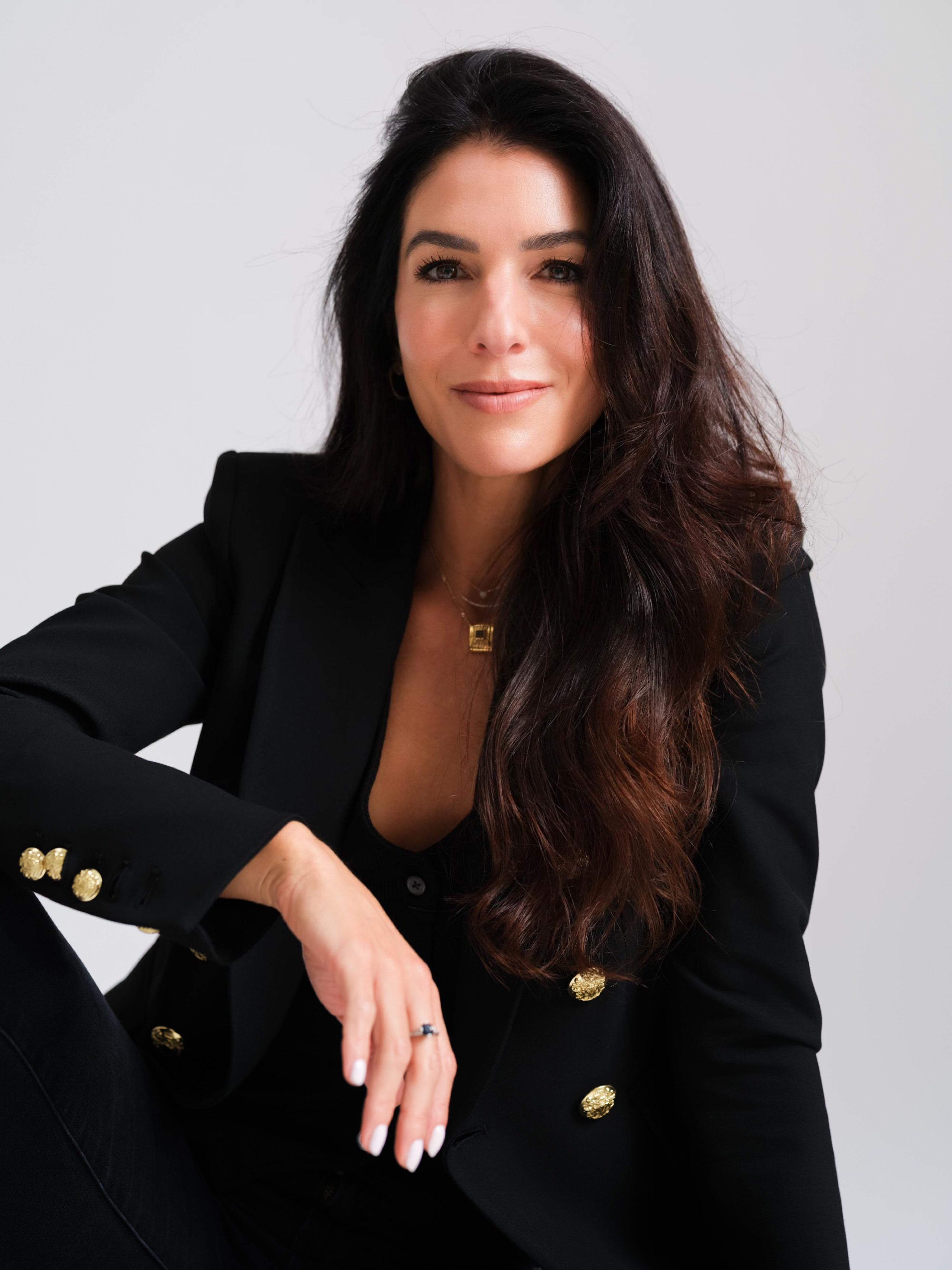
I'm Krystal Chryssomallis-
cultural producer and photographer
For twenty years I produced large-scale cultural events across more than 60 countries — including six UNESCO World Heritage sites, contributing to historic firsts many would have considered impossible — alongside organizations such as Disney, NASA, UNICEF, IMAX, PBS, WWF, and Boeing.
From the outside, those experiences look like extraordinary luck.
But none of it was luck.
I have been in rooms where the pressure was real and the answer was not obvious. Where government officials, artists, executives, and production teams were all waiting on the next decision — and there was no clean playbook. Where getting it wrong had immediate, visible, and major consequences.
I did not discover this work because pressure was easy for me.
I discovered it because pressure exposed everything.
I experience anxiety. I overthink. I freeze.
I know what it feels like to be the person everyone is waiting on, with no clear path forward, in a country you barely know, at 2:00am, when everything is falling apart.
IT CAME FROM THE FIELD
____________
Twenty years in the field showed me how to apply it.
I'm Krystal Chryssomallis-
cultural producer and photographer
For twenty years I produced large-scale cultural events across more than 60 countries — including six UNESCO World Heritage sites, contributing to historic firsts many would have considered impossible — alongside organizations such as Disney, NASA, UNICEF, IMAX, PBS, WWF, and Boeing.
From the outside, those experiences look like extraordinary luck.
But none of it was luck.
I have been in rooms where the pressure was real and the answer was not obvious. Where government officials, artists, executives, and production teams were all waiting on the next decision — and there was no clean playbook. Where getting it wrong had immediate, visible, and major consequences.
I did not discover this work because pressure was easy for me.
I discovered it because pressure exposed everything.
I experience anxiety. I overthink. I freeze.
I know what it feels like to be the person everyone is waiting on, with no clear path forward, in a country you barely know, at 2:00am, when everything is falling apart.
THE FOUNDATION
___________
What I needed was something more reliable than instinct. More repeatable than luck.
Over time I began to see that the best outcomes were not coming from one lucky break or one brilliant decision. They were coming from a sequence — a series of internal shifts that happened in a specific order, often in real time, under pressure.
As I began to recognize where I was in that sequence, something changed.
The anxiety quieted.
The confidence arrived.
The decisions became clearer.
And the outcomes were even better than I had imagined.
This was not a framework I read about. It was something I lived my way into.
And I could see it clearly because I always had a camera in my hand.
Photography taught me something that changed everything: perception is trainable.
The camera forces you to slow down and actually look — past the obvious, past the assumed, into what is genuinely there. That is not a passive act. It is a discipline. One I have practiced every day for twenty years.
Because I was practicing it inside environments where the stakes were real and the pressure was constant, I began to notice what no one else in those rooms saw.
The outcomes people were calling luck were not random. They were sequential.
And perception — trained, intentional perception — was where the sequence began.
In every high-stakes environment — working alongside Fortune 500 CEOs, astronauts, fighter jet pilots, global artists and government officials — every time something extraordinary happened, people would shrug and say the same thing.
"We got lucky."
And it bothered me every time.
Because you cannot build anything real around luck. You cannot rely on it when you are navigating a tough decision, a high-stakes conversation, or a moment that actually matters.
What I found is that the people who consistently created what looked like luck were not smarter, better connected, or more qualified. They were moving through a sequence — whether they knew it or not — that made better outcomes consistently more likely.
I call it the Mirror Method.
THE FOUNDATION
___________
What I needed was something more reliable than instinct. More repeatable than luck.
Over time I began to see that the best outcomes were not coming from one lucky break or one brilliant decision. They were coming from a sequence — a series of internal shifts that happened in a specific order, often in real time, under pressure.
As I began to recognize where I was in that sequence, something changed.
The anxiety quieted.
The confidence arrived.
The decisions became clearer.
And the outcomes were even better than I had imagined.
This was not a framework I read about. It was something I lived my way into.
And I could see it clearly because I always had a camera in my hand.
Photography taught me something that changed everything: perception is trainable.
The camera forces you to slow down and actually look — past the obvious, past the assumed, into what is genuinely there. That is not a passive act. It is a discipline. One I have practiced every day for twenty years.
Because I was practicing it inside environments where the stakes were real and the pressure was constant, I began to notice what no one else in those rooms saw.
The outcomes people were calling luck were not random. They were sequential.
And perception — trained, intentional perception — was where the sequence began.
In every high-stakes environment — working alongside Fortune 500 CEOs, astronauts, fighter jet pilots, global artists and government officials — every time something extraordinary happened, people would shrug and say the same thing.
"We got lucky."
And it bothered me every time.
Because you cannot build anything real around luck. You cannot rely on it when you are navigating a tough decision, a high-stakes conversation, or a moment that actually matters.
What I found is that the people who consistently created what looked like luck were not smarter, better connected, or more qualified. They were moving through a sequence — whether they knew it or not — that made better outcomes consistently more likely.
I call it the Mirror Method.
THE HOPE PHOTOGRAPH
_____________
There is something in your life right now that you are completely missing.
Not because it isn't there. But because the internal lens you are bringing into the moments that matter most isn’t wide enough to catch it.
One photograph made this undeniable for me.
I was producing a concert at a palace in Vadodara, India. Looking out my hotel window, the view was overwhelming: broken structures, unpaved roads, rooftops without walls. I felt helpless in what I was seeing.
Then, I heard laughter.
A brother and sister came running through the dust with a fistful of colorful balloons. Their joy was so fierce and complete that I began to cry.
I call this image HOPE.
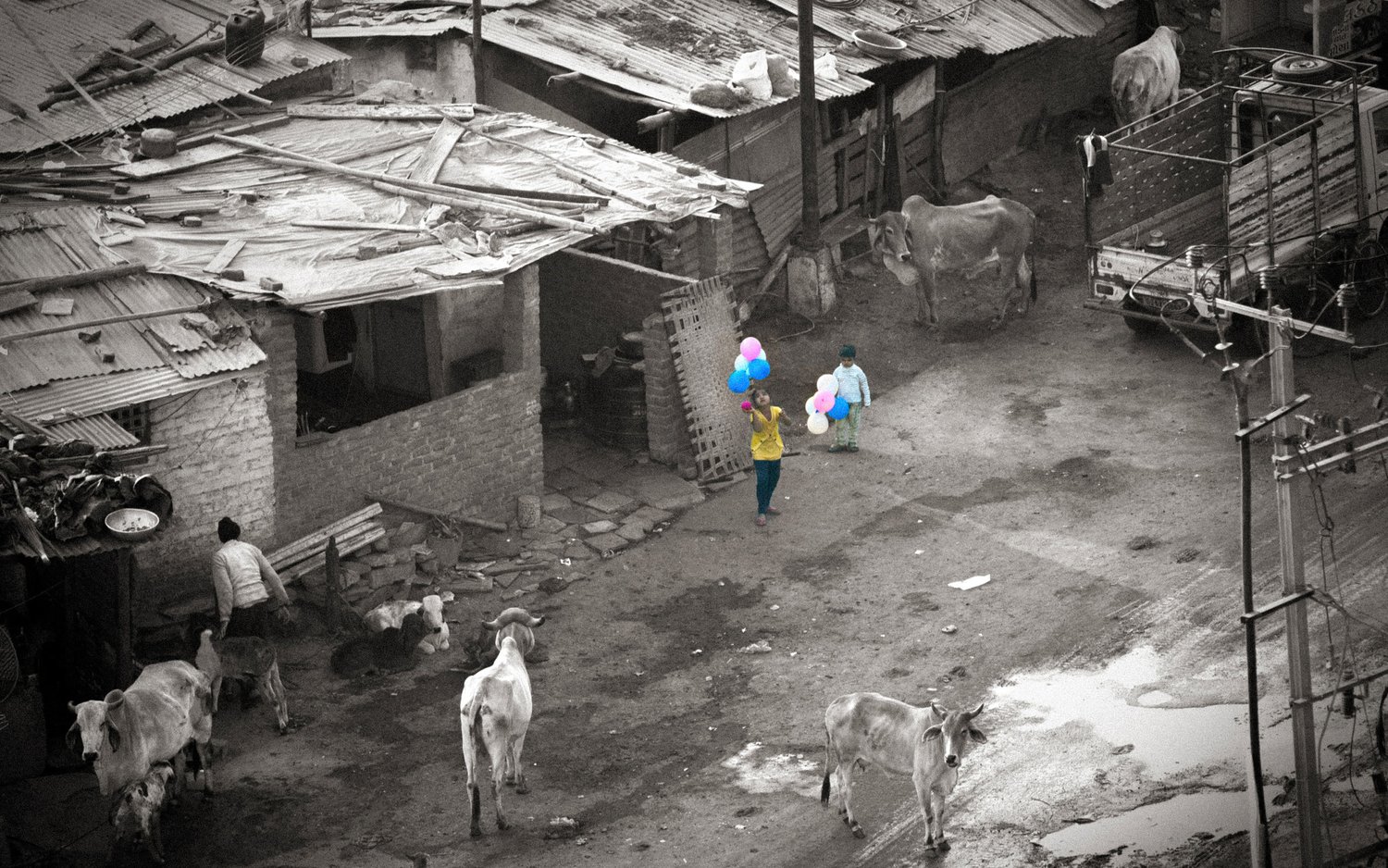
Years later, Dr. Thomas Lee used advanced pixel-mapping tools—originally developed for cancer research—to analyze that exact image.
The data revealed something staggering:
The children occupy exactly 0.58% of the photograph.
Less than one percent of the total frame. And yet, they are the entire story.
The hardship was still there. The broken structures were still there. Nothing had been erased. But intentional perception had found something else that was equally true.
That tiny 0.58% illuminated everything.
What you choose to see determines what becomes possible.
What This Means for You
This is not about toxic positivity or denying a difficult reality. It is about a rigorous discipline: training your perception so you can find the subtle openings that others walk right past.
You learn to see the 0.58% in your life, your business, and in your relationships:
You spot the hidden alignment in an important or difficult conversation.
You find the creative spark or path forward when a project feels completely stuck.
You see the precise next step during major life transitions, while everyone else is freezing under uncertainty.
The decisions became clearer.
THE HOPE PHOTOGRAPH
_____________
There is something in your life right now that you are completely missing.
Not because it isn't there. But because the internal lens you are bringing into the moments that matter most isn’t wide enough to catch it.
One photograph made this undeniable for me.
I was producing a concert at a palace in Vadodara, India. Looking out my hotel window, the view was overwhelming: broken structures, unpaved roads, rooftops without walls. I felt helpless in what I was seeing.
Then, I heard laughter.
A brother and sister came running through the dust with a fistful of colorful balloons. Their joy was so fierce and complete that I began to cry.
I call this image HOPE.
Years later, Dr. Thomas Lee used advanced pixel-mapping tools—originally developed for cancer research—to analyze that exact image.
The data revealed something staggering:
The children occupy exactly 0.58% of the photograph.
Less than one percent of the total frame. And yet, they are the entire story.
The hardship was still there. The broken structures were still there. Nothing had been erased. But intentional perception had found something else that was equally true.
That tiny 0.58% illuminated everything.
What you choose to see determines what becomes possible.
What This Means for You :
This is not about toxic positivity or denying a difficult reality. It is about a rigorous discipline: training your perception so you can find the subtle openings that others walk right past.
You learn to see the 0.58% in your life, your business, and in your relationships:
You spot the hidden alignment in an important or difficult conversation.
You find the creative spark or path forward when a project feels completely stuck.
You see the precise next step during major life transitions, while everyone else is freezing under uncertainty.
The decisions became clearer.
Same room. Same pressure.Completely different results.
THE SCIENCE
Analyzed by the Imaging Science Lab at Children's Hospital Los Angeles under Dr. Thomas C. Lee, MD (Director of the Vision Center at CHLA & Associate Professor of Clinical Ophthalmology at the Keck School of Medicine of USC).
THE IMPACT:
Used in an advanced seminar on grief and bereavement for psychiatry residents and fellows at the
University of North Carolina.
THE SCIENCE
Analyzed by the Imaging Science Lab at Children's Hospital Los Angeles under Dr. Thomas C. Lee, MD (Director of the Vision Center at CHLA & Associate Professor of Clinical Ophthalmology at the Keck School of Medicine of USC).
THE IMPACT:
Used in an advanced seminar on grief and bereavement for psychiatry residents and fellows at the
University of North Carolina.
Train your perception. Clear your blindspots.
Stop leaving your outcomes to chance.
Live Intensive Starts
JULY 2, 2026 • 10:00 AM PST
Art to Impact
LIMITED AVAILABILITY
TUITION
$595
Train your perception. Clear your blindspots. Stop leaving your outcomes to chance.
Live Intensive Starts
JULY 2, 2026 • 10:00 AM PST
Art to Impact
LIMITED AVAILABILITY
TUITION
$595
THE METHOD IN ACTION
___________
Same school. Same teachers A completely different outcome
Krish had been receiving Best in Performance awards for three years straight. Yet, on the inside, he was struggling.
“I felt judged and expected more of, which put quite a bit of pressure on me, to the point where I completely froze. I was completely overwhelmed, confused, and had lost all clarity.”
When he finally decided to speak with his teachers, he prepared the way many of us do when we are afraid we will be misunderstood: he tried to control everything.
Nothing terrible happened. But nothing opened up either. He left relieved to be out of the room, but still exhausted and confused.
Then, he learned the Mirror Method.
One week later, he went back. Same school. Same teachers. Same conversation. But this time, instead of relying on anxious instinct, he actively deployed the first two steps of the 6-step framework.
Before he even turned the doorknob, he applied Step 1: Mindful Framing.
Instead of bracing for failure and scripting a full page of notes, he anchored his internal focus and chose his frame before entering the room.
The impact was immediate.
“The second I entered, even before uttering a single word, I felt a different person [in the teacher]—different energy and more warmth.”
Because Krish changed his frame, the teacher unconsciously read that shift, dropped his guard, and met him with warmth.
Once inside, Krish applied Step 2: Intentional Noticing.
Instead of letting his anxiety drive him or trying to force a specific outcome, he read the room in real time — and noticed what was actually available.
He dropped his armor and admitted something honest: that he sometimes wondered if he actually had real creativity and passion.
His teacher stood up and said, “Let’s go play.”
He led Krish to the auditorium, sat him at a piano, and asked him to improvise. When Krish finished, his teacher said:
“If you didn’t have creativity, you wouldn’t be able to improvise. If you didn’t have passion, you wouldn’t have continued for more than a minute.”
It was the exact answer Krish had tried to force the week before. This time, he didn’t have to extract it.
By the end of that single day, two more relationships opened with teachers he had long assumed were out of reach. One offered him free weekly sessions.
Krish later wrote to me:
“Most of the questions I’d been searching for had been answered without me once directly asking them. The answers arrived through presence, not extraction. I had set the intention to be more of an observer — to notice rather than strategize. And ironically, that’s exactly when I got the most out of it.”
“That day, I discovered three new people."- kRISH
THE METHOD IN ACTION
___________
Same school. Same teachers A completely different outcome
Krish had been receiving Best in Performance awards for three years straight. Yet, on the inside, he was struggling.
“I felt judged and expected more of, which put quite a bit of pressure on me, to the point where I completely froze. I was completely overwhelmed, confused, and had lost all clarity.”
When he finally decided to speak with his teachers, he prepared the way many of us do when we are afraid we will be misunderstood: he tried to control everything.
Nothing terrible happened. But nothing opened up either. He left relieved to be out of the room, but still exhausted and confused.
Then, he learned the Mirror Method.
One week later, he went back. Same school. Same teachers. Same conversation. But this time, instead of relying on anxious instinct, he actively deployed the first two steps of the 6-step framework.
Before he even turned the doorknob, he applied Step 1: Mindful Framing.
Instead of bracing for failure and scripting a full page of notes, he anchored his internal focus and chose his frame before entering the room.
The impact was immediate.
“The second I entered, even before uttering a single word, I felt a different person [in the teacher]—different energy and more warmth.”
Because Krish changed his frame, the teacher unconsciously read that shift, dropped his guard, and met him with warmth.
Once inside, Krish applied Step 2: Intentional Noticing.
Instead of letting his anxiety drive him or trying to force a specific outcome, he read the room in real time — and noticed what was actually available.
He dropped his armor and admitted something honest: that he sometimes wondered if he actually had real creativity and passion.
His teacher stood up and said, “Let’s go play.”
He led Krish to the auditorium, sat him at a piano, and asked him to improvise. When Krish finished, his teacher said:
“If you didn’t have creativity, you wouldn’t be able to improvise. If you didn’t have passion, you wouldn’t have continued for more than a minute.”
It was the exact answer Krish had tried to force the week before. This time, he didn’t have to extract it.
By the end of that single day, two more relationships opened with teachers he had long assumed were out of reach. One offered him free weekly sessions.
Krish later wrote to me:
“Most of the questions I’d been searching for had been answered without me once directly asking them. The answers arrived through presence, not extraction. I had set the intention to be more of an observer — to notice rather than strategize. And ironically, that’s exactly when I got the most out of it.”
“That day, I discovered three new people."- kRISH
WHAT PEOPLE ARE SAYING
___________
The method doesn't just shift how you see.
It shifts what become possible
In June 2026, I was invited to lead a Masterclass for Rohingyatographer's Human Rights and Human Wrongs program in Cox's Bazar — the largest refugee camp in the world — working with young Rohingya storytellers (via Zoom) on presence, perception, and photography that connects.
Afterward, the organization wrote:
★ ★ ★ ★ ★
“Krystal led an incredibly moving masterclass... teaching our young storytellers how to bring deep presence, perception, and awareness into the field. Our students learned that powerful photographs don’t simply tell a viewer how to feel—they invite them in to learn and connect. Thank you, Krystal, for your profound insights and for empowering the next generation of image-makers.”
— Rohingyatographer
WHAT PEOPLE ARE SAYING
___________
The method doesn't just shift how you see.
It shifts what becomes possible
In June 2026, I was invited to lead a Masterclass for Rohingyatographer's Human Rights and Human Wrongs program in Cox's Bazar — the largest refugee camp in the world — working with young Rohingya storytellers (via Zoom) on presence, perception, and photography that connects.
Afterward, the organization wrote:
★ ★ ★ ★ ★
“Krystal led an incredibly moving masterclass... teaching our storytellers how to bring deep presence, perception, and awareness into the field. Our students learned that powerful photographs don’t simply tell a viewer how to feel—they invite them in to learn and connect. Thank you, Krystal, for your profound insights and for empowering the next generation of image-makers.”
— Rohingyatographer
THE INTENSIVE
___________
Art to Impact
Luck is not a strategy. But opportunity recognition is.
Most people take this intensive because they are exhausted from watching opportunities, important conversations, and meaningful moments pass them by — leaving their outcomes to chance, while hoping for a “lucky break” that never comes.
Over twenty years in the field, I developed a repeatable, systematic practice for exactly that — training you to see what is actually available in any given moment and act on it before it disappears.
This isn’t about becoming “lucky.” It’s about becoming the kind of person who consistently recognizes and acts on opportunity.
Six weeks from now, when you show up and do the work:
The conversation you have been avoiding? You will finally have it.
The decision you have been circling? You will finally make it.
The creative work that has been stuck? It will finally move.
Not because the pressure disappeared.
Because you learned to see the hidden 0.58% that was always there.
Less overthinking. Less time in freeze. More clarity. More confidence. More of what others call luck.
THE INTENSIVE
___________
Art to Impact
Luck is not a strategy. But opportunity recognition is.
Most people take this intensive because they are exhausted from watching opportunities, important conversations, and meaningful moments pass them by — leaving their outcomes to chance, while hoping for a “lucky break” that never comes.
Over twenty years in the field, I developed a repeatable, systematic practice for exactly that — training you to see what is actually available in any given moment and act on it before it disappears.
This isn’t about becoming “lucky.” It’s about becoming the kind of person who consistently recognizes and acts on opportunity.
Six weeks from now, when you show up and do the work:
The conversation you have been avoiding? You will finally have it.
The decision you have been circling? You will finally make it.
The creative work that has been stuck? It will finally move.
Not because the pressure disappeared. Because you learned to see the hidden 0.58% that was always there.
Less overthinking. Less time in freeze. More clarity. More confidence. More of what others call luck.
HOW IT WORKS
___________
Each week we meet live
-teaching, practice, and real application. We go deep on the first two steps of the Mirror Method — Mindful Framing and Intentional Noticing — and you apply them directly to whatever you are navigating now.
You bring the real thing
— the conversation, the decision, the creative block, the room you want to enter differently. The method gives you a different lens. The practice trains you to find your own 0.58%.
Then you take that into your actual life.
Perception is trainable. But like any discipline, it requires practice to become instinctive. These six weeks are that practice
HOW IT WORKS
___________
Each week we meet live
-teaching, practice, and real application. We go deep on the first two steps of the Mirror Method — Mindful Framing and Intentional Noticing — and you apply them directly to whatever you are navigating now.
You bring the real thing
— the conversation, the decision, the creative block, the room you want to enter differently. The method gives you a different lens. The practice trains you to find your own 0.58%.
Then you take that into your actual life.
Perception is trainable. But like any discipline, it requires practice to become instinctive. These six weeks are that practice
WHAT'S INCLUDED
___________
• Six Live Weekly Sessions with Krystal: One per week over Zoom for 60 to 90 minutes. These are not lectures. Each call is a live practice space where the method is applied directly to the real situations you and the other participants are navigating. The conversation in the room is where the shift happens.
• A Cohort of 10 Participants: Kept intentionally small because this work requires real conversation and precise feedback. This ensures the space stays tight enough for each person to be seen and specific enough for the work to remain highly useful.
• All Sessions Recorded: Available exclusively to enrolled participants. While showing up live is where the real change happens, every recording is archived and accessible to you at any time.
• A private one-on-one session with Krystal for the first three to enroll: Dedicated time to apply the framework directly to your specific situation, decision, or project at no additional cost.
The Founding Cohort
___________
The tuition for this founding cohort is $595
and it will not be offered at this rate again.
This framework has been taught in university leadership seminars, at the largest refugee camp in the world, and in private sessions with artists, entrepreneurs, and professionals navigating meaningful transitions. The people in this intensive will help shape how the work is carried forward.
The Guarantee
Attend the first session.
If you leave feeling this is not the right room for you, email me within 24 hours. I will refund your tuition in full, no questions asked.
WHAT'S INCLUDED
___________
• Six Live Weekly Sessions with Krystal: One per week over Zoom for 60 to 90 minutes. These are not lectures. Each call is a live practice space where the method is applied directly to the real situations you and the other participants are navigating. The conversation in the room is where the shift happens.
• A Cohort of 10 Participants: Kept intentionally small because this work requires real conversation and precise feedback. This ensures the space stays tight enough for each person to be seen and specific enough for the work to remain highly useful.
• All Sessions Recorded: Available exclusively to enrolled participants. While showing up live is where the real change happens, every recording is archived and accessible to you at any time.
• A private one-on-one session with Krystal for the first three to enroll: Dedicated time to apply the framework directly to your specific situation, decision, or project at no additional cost.
The Founding Cohort
___________
The tuition for this founding cohort is $595 — and it will not be offered at this rate again.
This framework has been taught in university leadership seminars, at the largest refugee camp in the world, and in private sessions with artists, entrepreneurs, and professionals navigating meaningful transitions. The people in this intensive will help shape how the work is carried forward.
The Guarantee
Attend the first session.
If you leave feeling this is not the right room for you, email me within 24 hours. I will refund your tuition in full, no questions asked.
I built this practice because I needed it and I teach it because I have watched it change
outcomes for people who could not afford to get it wrong.
Live Intensive Starts
July 2, 2026 - 10:00 AM PST / 1PM EST
Availability is Limited
Tuition
$595
I built this practice because I needed it and I teach it because I have watched it change
outcomes for people who could not afford to get it wrong.
Live Intensive Starts
July 2, 2026 - 10:00 AM PST / 1PM EST
Availability
Limited Availability
Tuition
$595
FREQUENTLY ASKED QUESTIONS
___________
Everything you need to
make the decision
Is this right for me?
This intensive is right for you if you have a real-world scenario you are currently navigating— a meaningful decision, a life transition, a tough conversation, a creative block, or a pattern you are ready to change. You don’t need to have it all figured out. You just need a scenario that matters to you and a willingness to practice.
Is this only for artists or photographers?
No. Art to Impact is for artists, photographers, writers, entrepreneurs, teachers, moms, graduates, and anyone navigating a meaningful moment of change, creation, visibility, or decision. The “art” is not only about making things. It is about how you consciously create, choose, communicate, and move through the world.
What actually happens in each session?
Each week includes direct framework teaching, guided reflection, and live application. You bring a real situation into the room, and we apply the Mirror Method steps directly to it. This is a tactical practice space, not a video series you passively watch.
What if I don’t know exactly what I want to work on?
That is completely fine. You can enter the intensive with a highly specific project or conversation, or simply with the clear sense that a certain area of your life is stuck and ready to move differently. We will navigate the mechanics from there.
What if I miss a live session?
Every single call is recorded and uploaded to our private Skool community. While the live, real-time conversation is where the primary shift happens, the archived recordings are yours to access at any time if a conflict comes up.
Why is the cohort limited to 10 people?
Because real feedback needs space. A small room allows the work to stay hyper-specific, deeply personal, and immediately useful. Ten participants provide enough collective energy for diverse reflection, but enough intimacy for every single person to be seen.
What is the refund policy?
Take the first life session. If you leave that call feeling like this isn’t the right room for you, simply email me within 24 hours. I will refund your tuition in full, no questions asked.
FREQUENTLY ASKED QUESTIONS
___________
Everything you need to
make the decision
Is this right for me?
This intensive is right for you if you have a real-world scenario you are currently navigating— a meaningful decision, a life transition, a tough conversation, a creative block, or a pattern you are ready to change. You don’t need to have it all figured out. You just need a scenario that matters to you and a willingness to practice.
Is this only for artists or photographers?
No. Art to Impact is for artists, photographers, writers, entrepreneurs, teachers, moms, graduates, and anyone navigating a meaningful moment of change, creation, visibility, or decision. The “art” is not only about making things. It is about how you consciously create, choose, communicate, and move through the world.
What actually happens in each session?
Each week includes direct framework teaching, guided reflection, and live application. You bring a real situation into the room, and we apply the Mirror Method steps directly to it. This is a tactical practice space, not a video series you passively watch.
What if I don’t know exactly what I want to work on?
That is completely fine. You can enter the intensive with a highly specific project or conversation, or simply with the clear sense that a certain area of your life is stuck and ready to move differently. We will navigate the mechanics from there.
What if I miss a live session?
Every single call is recorded and uploaded to our private Skool community. While the live, real-time conversation is where the primary shift happens, the archived recordings are yours to access at any time if a conflict comes up.
Why is the cohort limited to 10 people?
Because real feedback needs space. A small room allows the work to stay hyper-specific, deeply personal, and immediately useful. Ten participants provide enough collective energy for diverse reflection, but enough intimacy for every single person to be seen.
What is the refund policy?
Take the first life session. If you leave that call feeling like this isn’t the right room for you, simply email me within 24 hours. I will refund your tuition in full, no questions asked.
Art to Impact begins July 2, 2026
__________
Six weeks from now — if you do the work — you will have entered spaces you were actively avoiding.
You will have had conversations you kept delaying. You will have moved through uncertainty with more clarity than you thought
was available to you, and started generating more outcomes other people call luck.
Not because the pressure miraculously disappeared. It will happen because you learned to see more of what was actually there.
What you choose to see determines what becomes possible.
Art to Impact
begins July 2, 2026
__________
Six weeks from now — if you do the work — you will have entered spaces you were actively avoiding.
You will have had conversations you kept delaying. You will have moved through uncertainty with more clarity than you thought
was available to you, and started generating more outcomes other people call luck.
Not because the pressure miraculously disappeared. It will happen because you learned to see more of what was actually there.
What you choose to see determines what becomes possible.
©2026 Krystalán Photography. All Rights Reserved.